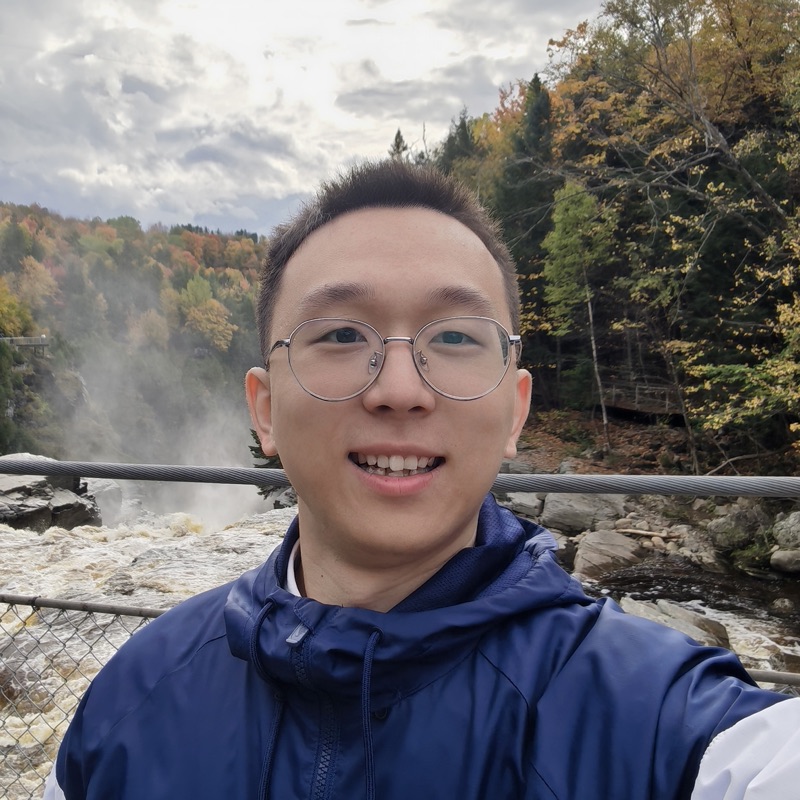
About
My name is 尚嘉奇 (Jiaqi Shang), and I'm from Baotou, Inner Mongolia, in northern China.
I'm a Master of Science in Applied Computing student at the University of Toronto, where I work with Prof. Rahul G. Krishnan on foundation models for tabular and causal data. I'm also a visiting graduate student at UC Riverside and a volunteer researcher at California State University, Fullerton. There I work with Prof. Bingling Huang on multi-agent reinforcement learning, and with Prof. Huang and Prof. Yuanhang Zhu on agents that learn to swim through complex fluid flows.
Before that, I studied computer science and statistics at the University of Waterloo, and did research with Prof. Pascal Poupart at Waterloo and the Vector Institute. Together we developed Basis Transformers, a model that learns across many regression tasks on messy real-world tables, with text features, varying columns, and missing values.
I use AI in nearly everything I can think of, from my daily workflow to my software projects, and it keeps impressing me, all the more because it is getting better so quickly. On anything that comes down to memorization and pattern matching, today's models are already better than I am, and better than I ever expected. Where they still fall short is design, invention, creativity, and reasoning: deciding what is worth building, and why. That is where I want to focus.
It is also why I want to go deeper into research and into the essence of things: to spend my time on the creative part, to understand the theory underneath, and to feel the beauty where mathematics, computing, science, and the humanities meet. That doesn't mean leaving applications behind. I enjoy applied work, and I believe strength in theory and strength in practice grow together.
In short, I hope my work helps all of us, as humans, find a little more joy, live our lives more fully, and savour the time we have.
Education
- Sep 2025 –Dec 2026Expected
Master of Science in Applied Computing, University of Toronto
- GPA 4.0/4.0
- Sep 2020 –Apr 2025
Bachelor of Mathematics, University of Waterloo
Double major in Computer Science and Statistics
Minor in Computational Mathematics
- GPA 89.51% · Excellent Standing and Term Distinction in every term
Selected Publications
† First author.
Should cooperating agents know who their teammates are? We treat agent identity as an explicit social signal in multi-agent reinforcement learning and compare ways to represent it; on a cooperative box-pushing assembly task, structured social information makes agents learn faster and perform better as a team.
Self-organizing systems (SoS) have emerged as a promising paradigm for enabling scalable and adaptive coordination in complex engineering tasks. Recent advances in multi-agent reinforcement learning (MARL) provide a powerful methodology for learning decentralized policies. However, existing approaches lack a deep understanding of social interactions, limiting their ability to effectively utilize rich social information.
This paper investigates how social learning can be systematically integrated into MARL by focusing on the representation of social information, particularly agent identity (ID). Prior studies have shown that team-level behaviors often evolve into distinct role specializations, suggesting that agent identity may play an important role in learning and coordination. However, how such information should be represented and incorporated into the learning process remains unclear. To address this, we conceptualize social capability as a spectrum and extend it by introducing agent identity as an explicit social signal. We further examine how different representation methods influence learning dynamics and team-level performance.
Experiments are conducted on a cooperative box-pushing assembly task with collision avoidance, which requires complex coordination and long-term strategy formation. The results demonstrate that incorporating structured social information improves learning efficiency and task performance, while revealing key mechanisms of social learning in multi-agent systems. This work provides new insights into socially-aware MARL and contributes to the design of self-organizing systems for complex engineering applications.
Recovering a camera's original RAW sensor data from an ordinary sRGB photo, without knowing which camera took it. We add ControlNet guidance to RAW-Diffusion so it generalizes to unseen sensors with no metadata, beating the baseline on Nikon and staying competitive on Canon, Leica, and Sony.
Recovering RAW sensor measurements from sRGB images is a central problem in computational photography, as RAW data preserves the true scene radiance prior to the nonlinear transformations introduced by a camera’s Image Signal Processing (ISP) pipeline. However, ISPs vary across different camera brands and models, making inverse ISP reconstruction particularly challenging when the sensor characteristics are unknown. Existing approaches often rely on metadata, modifiable ISP, or camera-specific training, which limits their ability to generalize across unseen devices. In this paper, we investigate a diffusion-based inverse ISP framework designed for cross-sensor RAW reconstruction. Building upon the RAW-Diffusion model, we incorporate a ControlNet-guided architecture that provides structured conditioning to improve generalization without requiring metadata at inference time. Using the MIT-Adobe FiveK dataset, we evaluate seven camera models, which is sufficient to test cross-sensor robustness. Our results demonstrate that the proposed ControlNet-enhanced model enhances reconstruction accuracy on unseen sensors, outperforming the baseline RAW-Diffusion model on the Nikon dataset and achieving competitive performance on Canon, Leica, and Sony. These findings highlight the potential of guidance-based diffusion models for practical, camera-agnostic inverse ISP.
A transformer for real-world tables: text features, a varying number of columns, missing and noisy values. Across 34 OpenML-CTR23 regression tasks it improves median R² by 0.338 with the lowest variance of any method, using five times fewer parameters than the strongest baseline.
Dealing with tabular data is challenging due to partial information, noise, and heterogeneous structure. Existing techniques often struggle to simultaneously address key aspects of tabular data such as textual information, a variable number of columns, and unseen data without metadata besides column names. We propose a novel architecture, basis transformers, specifically designed to tackle these challenges while respecting inherent invariances in tabular data, including hierarchical structure and the representation of numeric values. We evaluate our design on a multi-task tabular regression benchmark, achieving an improvement of 0.338 in the median R² score and the lowest standard deviation across 34 tasks from the OpenML-CTR23 benchmark. Furthermore, our model has five times fewer parameters than the best-performing baseline and surpasses pretrained large language model baselines – even when initialized from randomized weights.
No publications in this topic yet.
Selected Projects
- Apr 2026 –Ongoing
Multi-agent reinforcement learning for fish navigation in flow
Self-propelled fish agents trained with PPO to navigate time-varying vortex flows, with an observation ablation that shows which flow features actually drive navigation.
- Sep 2025 –Dec 2025
Protein information flow via Granger causality
Protein allostery as causal discovery on molecular-dynamics trajectories of adenylate kinase. A neural Granger model with a Bayesian prior recovers directed signalling pathways that correlation-based baselines miss.
No projects in this topic yet.
Research
- Apr 2026 –Ongoing
Visiting Graduate Student, UC Riverside
With Prof. Yuanhang Zhu and Prof. Bingling Huang
Reinforcement learning for fish-like swimmers in time-varying vortex flows.
- Jan 2026 –Ongoing
Volunteer Research Assistant, California State University, Fullerton
With Prof. Bingling Huang
Multi-agent reinforcement learning for self-organized assembly.
- Oct 2025 –Ongoing
Student Research Assistant, University of Toronto
Causal foundation models — scaling CausalPFN, calibrating TraCEE, the Virtual Cell Challenge.
- Jan 2024 –Apr 2025
Undergraduate Research Assistant, University of Waterloo
With Prof. Pascal Poupart
Basis transformers for multi-task tabular regression.
- May 2024 –Aug 2024
Undergraduate Research Scientist, Vector Institute
With Prof. Pascal Poupart
Contextual bandits with RBF-histogram reward models.
Industry
- May 2026 –Ongoing
Data AI Platform Developer (Intern), Geotab, Toronto
GenAI gateway and agentic AI platform serving 3,500+ users.
- Oct 2025 –Sep 2026
Machine Learning Researcher (Part-time Intern), Orka
GAN-based speech enhancement with a causal transformer U-Net.
- May 2023 –Dec 2023
Full Stack Developer (Co-op), Aterlo Networks, Waterloo
Telemetry pipelines and tooling for 10M+ network devices.
- Mar 2022 –Aug 2022
Data Engineer (Co-op), Tesla, Shanghai
Seat-belt detection analytics over 10M+ events, and a Django and MySQL web portal for HR recruiting data.
- Sep 2021 –Dec 2021
Machine Learning Engineer (Co-op), iFlytek, Beijing
Chinese paraphrase generation with BERT back-translation.
Awards
- 2026
Mitacs Accelerate Award$30,000
- 2024
Vector Institute Research Grant$7,500
- 2024
University of Waterloo President's Research Award$1,500
- 2022
Waterloo CS International Student Upper-Year Scholarship$3,000
- 2021
Waterloo President's Scholarship of Distinction$2,000
Off the clock
Charlie Puth is my favourite artist. These are the albums I keep coming back to.

VoicenotesCharlie Puth · 2018
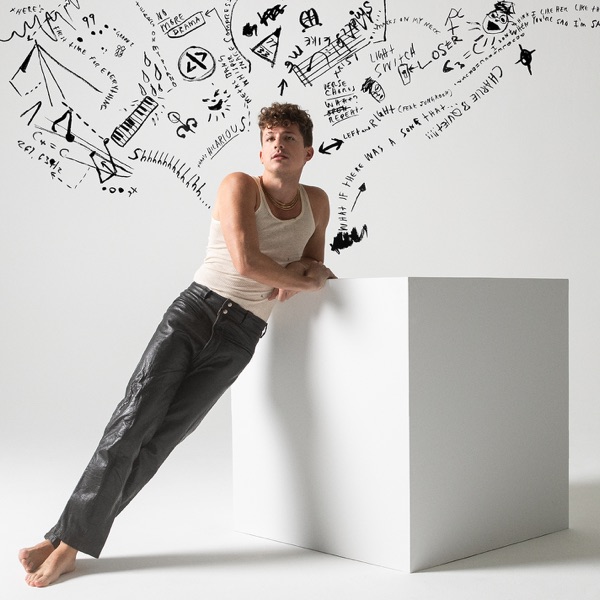
CHARLIECharlie Puth · 2022
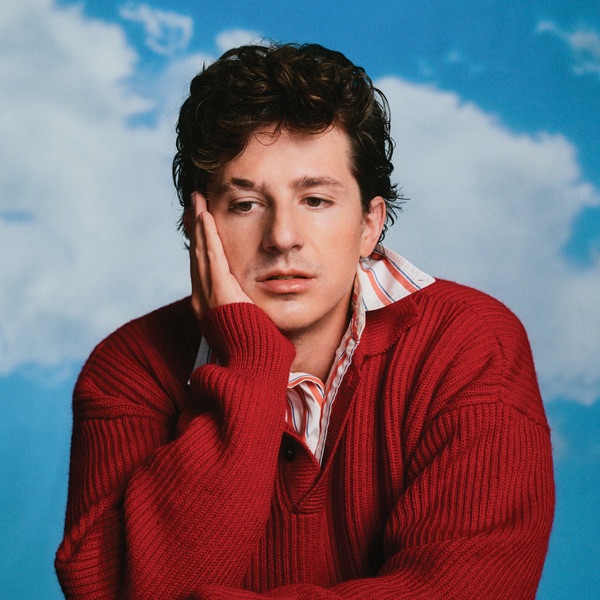
Whatever's Clever!Charlie Puth · 2026

Illustration by 西风八爪
My favourite dog is the Shiba Inu.
Here's one working as hard as I am.
Where people have visited this page from.
The visitor map loads on the live site only, so local previews don't count as visits.